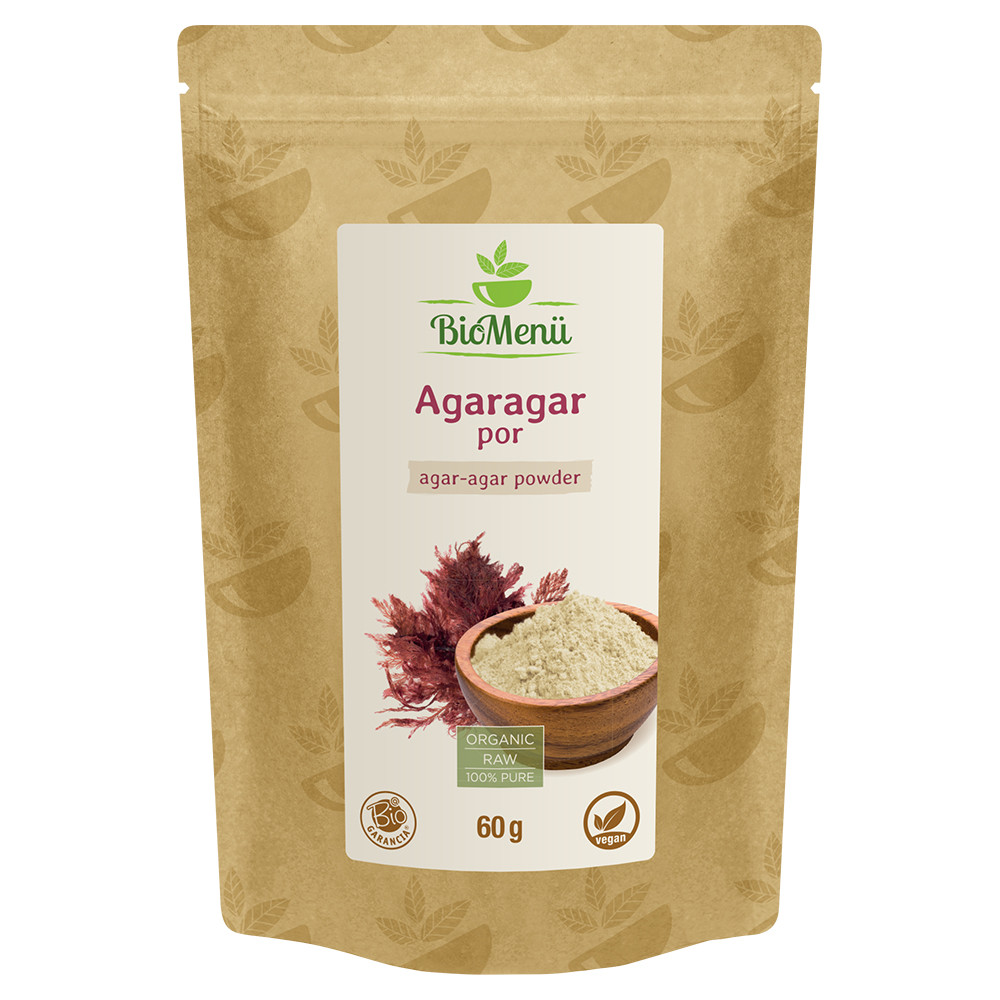
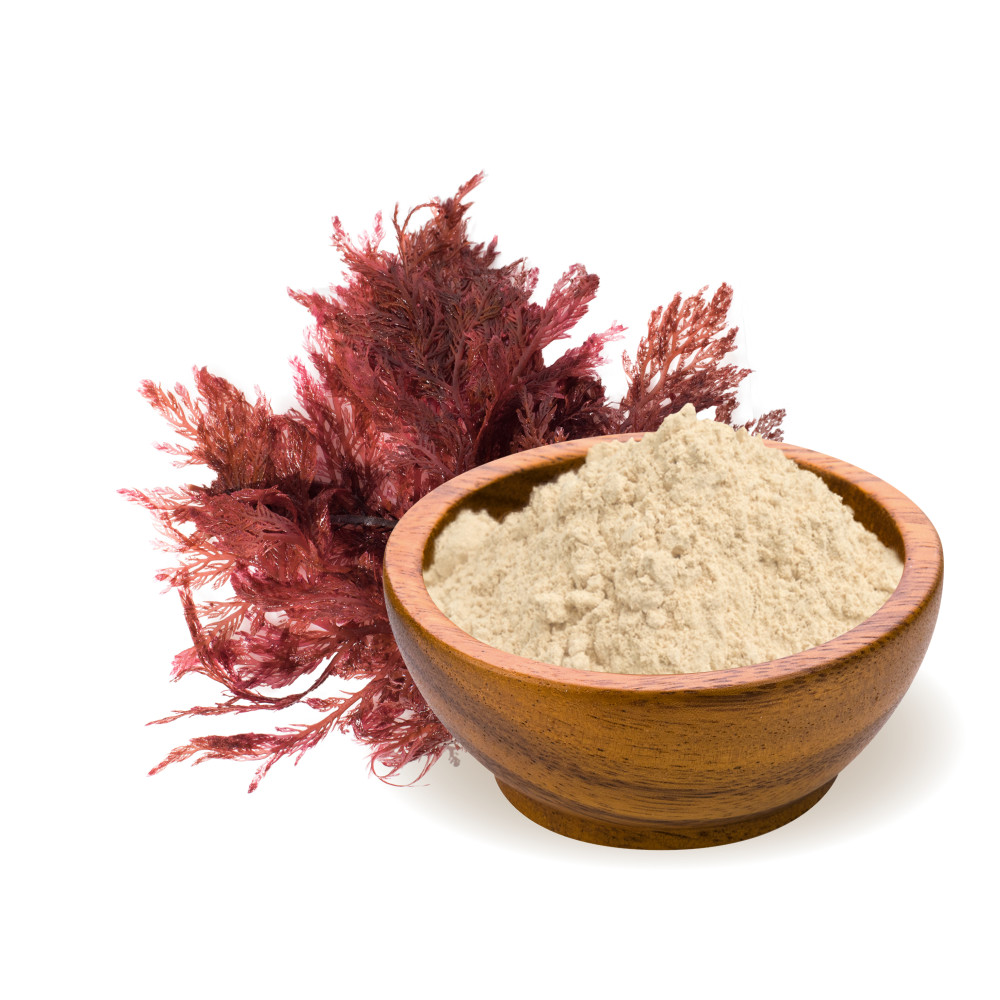
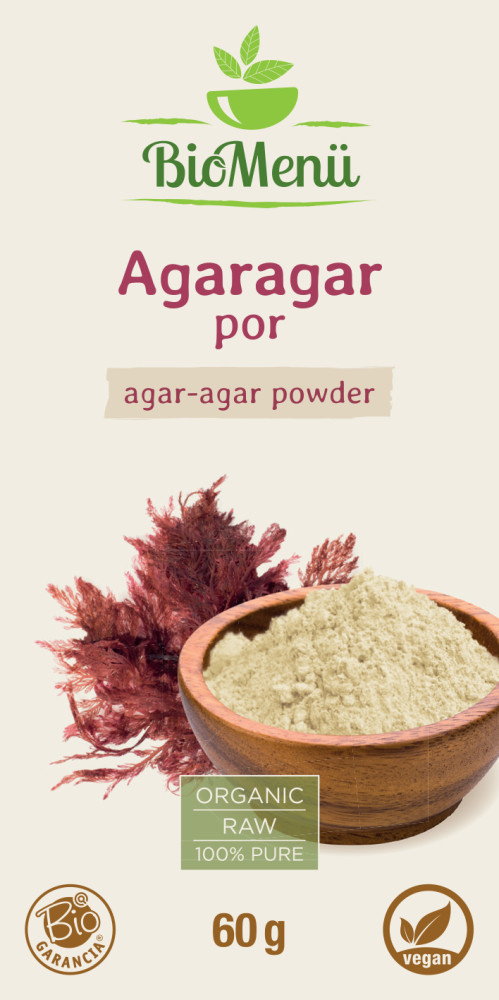
Agar agar is a polysaccharide extracted from red seaweed (Rhodophyceae), mainly Gelidium and Gracilaria. A natural, vegan and vegetarian substitute for gelatin. Tasteless and odorless, it can be used to prepare various desserts, sweets and other dishes. Agar agar is a gelling agent, which means it can be used to thicken and solidify liquids. Heat-stable, i.e. it can be used for both cold and hot food. It is soluble in water but not in alcohol.
To use agar agar powder, simply add it to warm liquid and bring to a boil. The liquid then solidifies at about 45 degrees Celsius. The required amount of agar agar powder depends on the desired thickness or strength of the final product. For a soft set gel, use about 0.5 to 1 teaspoon of agar agar powder per cup of liquid. For a firmer consistency, use 1.5-2 teaspoons per cup of liquid.
Agar agar is a versatile ingredient that can be used in a variety of dishes. It is a popular ingredient in Asian cuisine, such as the Japanese dessert called Anmitsu, which consists of small cubes of agar jelly, often served with fresh fruit.
Organic; Vegan; Natural materials; Not-irradiated; Artificial flavorless; Free-from artificial coloring; Preservative-free; BSE/TSE-free; GMO free; No added sugars; Allergen free; Fat-free; Free from saturated fat; Sugar-free; Rich in dietary fiber
Dosage, recommended use, storage
One dose = to taste
to taste
It can be used as an ingredient as a thickener for soups or as a gelling agent for candies and ice creams.
Storage: In a well-closed, dry, cool, sun-protected place
Ingredients
100% Agar-Agar
Nutrition Information
| Energy | 728 kJ/174 kcal | | | |
| Fat | 0,1 g | | | |
| - of which saturated fatty acids | 0,1 g | | | |
| - of which monounsaturated fatty acid | 0,1 g | | | |
| - of which polyunsaturated fatty acid | 0,1 g | | | |
| Carbohydrate | 0 g | | | |
| - of which sugar | 0 g | | | |
| Fibre | 90 g | | | |
| Protein | 0,7 g | | | |
| Salt | 0,33 g | | | |
| Iodine | 807 μg | 538.00 | 24 μg | 16.00 |
1 NRV (Nutrient Reference Values): Percentage of Daily Reference Intakes for Adults (8400 kJ/2000 kcal)
Average values. We regularly review our nutritional information.
Cautions
- QualityBeing a natural product, the nutritional properties may change depending on environmental conditions and over time.