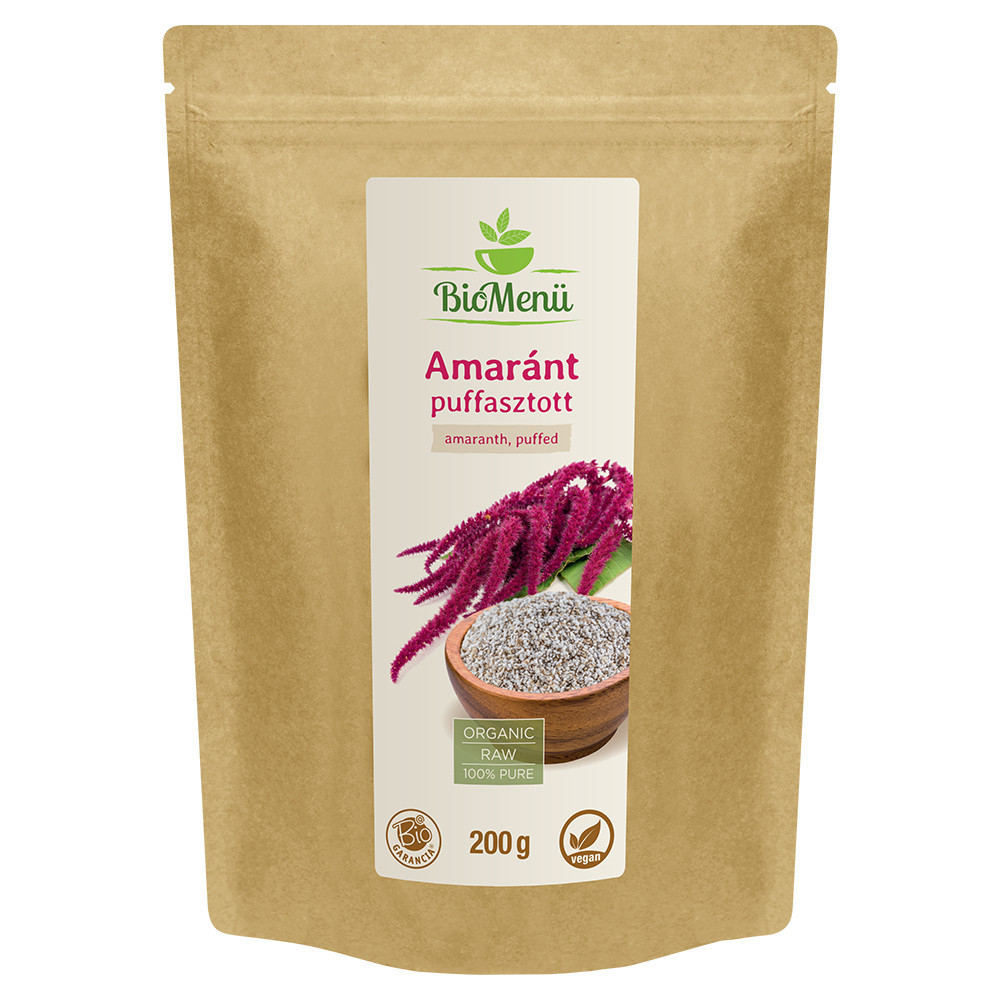
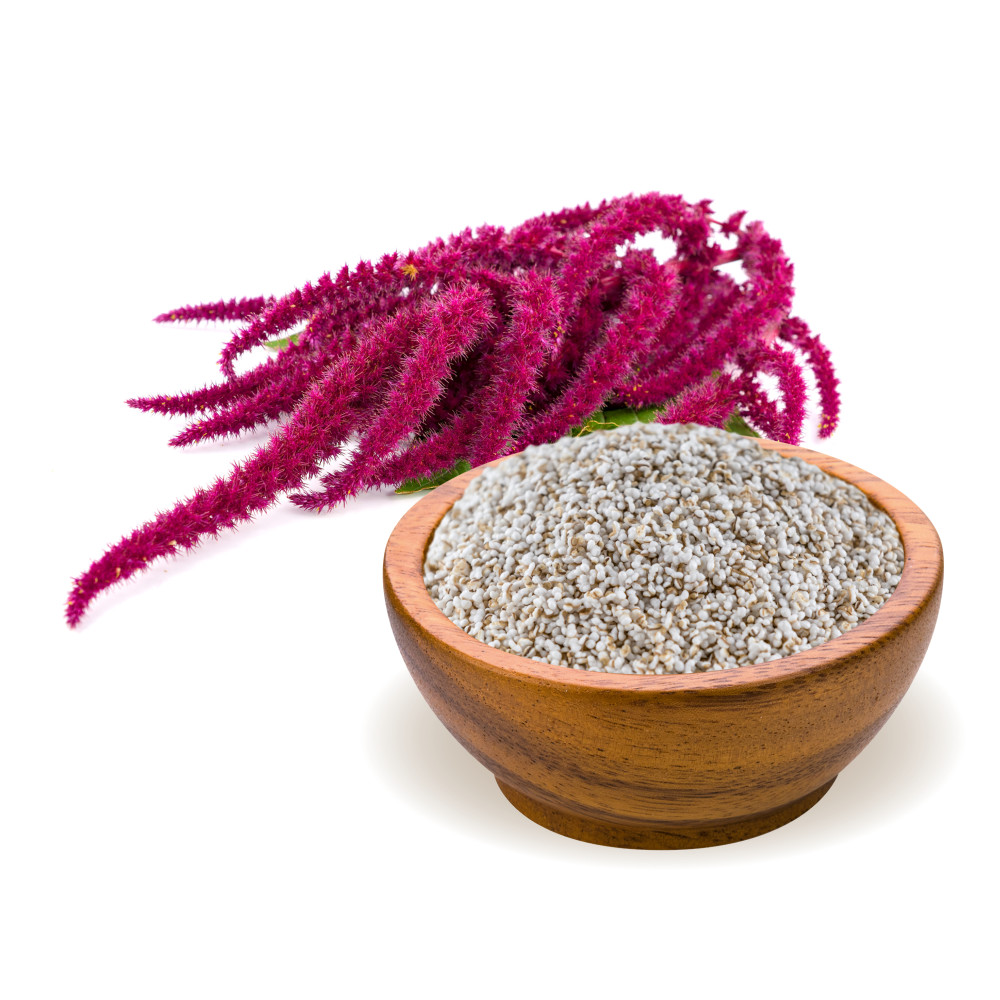
Although amaranth has only recently become popular as a health food, this ancient grain has been a staple food ingredient in some parts of the world for thousands of years. It has an impressive nutritional profile.
Amaranth is a group of more than 60 different types of grain that have been cultivated for about 8,000 years. These grains were once considered a staple food in the Inca, Mayan and Aztec civilizations.
Amaranth is classified as a pseudo-grain, which means it's not technically a grain like wheat or oats, but it has a similar set of nutrients and is used in a similar way. Its earthy, nutty taste can be used well with a variety of dishes.
In addition to being incredibly versatile, this nutritious grain is naturally gluten-free and rich in protein, fiber, micronutrients and antioxidants.
Best of all, this grain is easy to prepare and can be added to a variety of dishes, making it a great addition to your diet.
Organic; Vegan; Natural materials; Not-irradiated; Artificial flavorless; Free-from artificial coloring; Preservative-free; BSE/TSE-free; GMO free; No added sugars; Glutenfree; Poor in saturated fat; Sugar-free; Rich in dietary fiber; Especially low in sodium/salt
Dosage, recommended use, storage
One dose = to taste
to taste
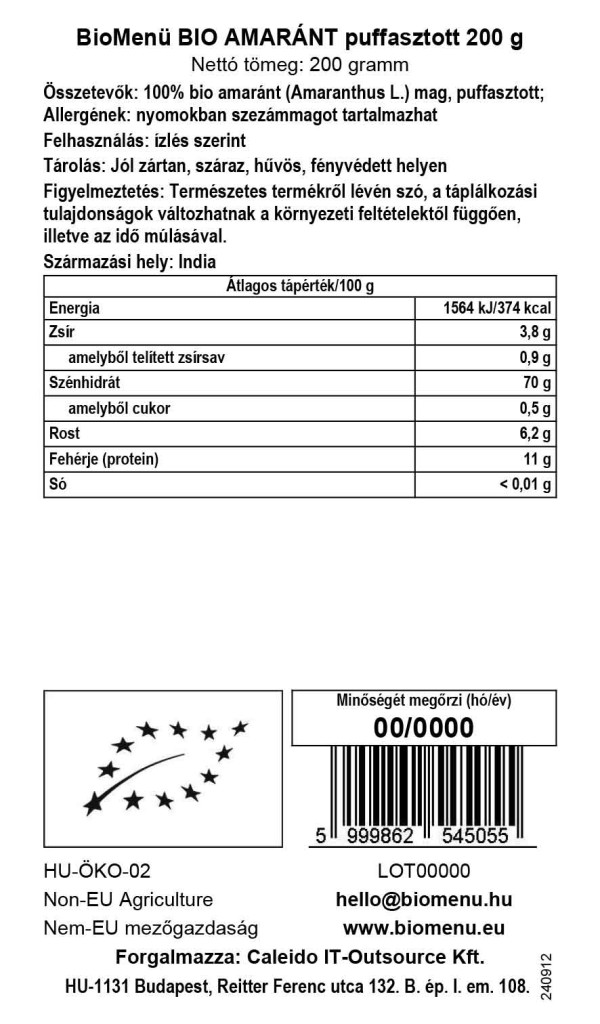
Storage: In a well-closed, dry, cool, sun-protected place
Ingredients
100% organic amaranth (Amaranthus L.) seeds, puffed; Allergens: may contain traces of sesame seeds
Nutrition Information
| Energy | 1564 kJ/374 kcal |
| Fat | 3,8 g |
| - of which saturated fatty acids | 0,9 g |
| Carbohydrate | 70 g |
| - of which sugar | 0,5 g |
| Fibre | 6,2 g |
| Protein | 11 g |
| Salt | < 0,01 g |
Average values. We regularly review our nutritional information.
Cautions
- QualityBeing a natural product, the nutritional properties may change depending on environmental conditions and over time.