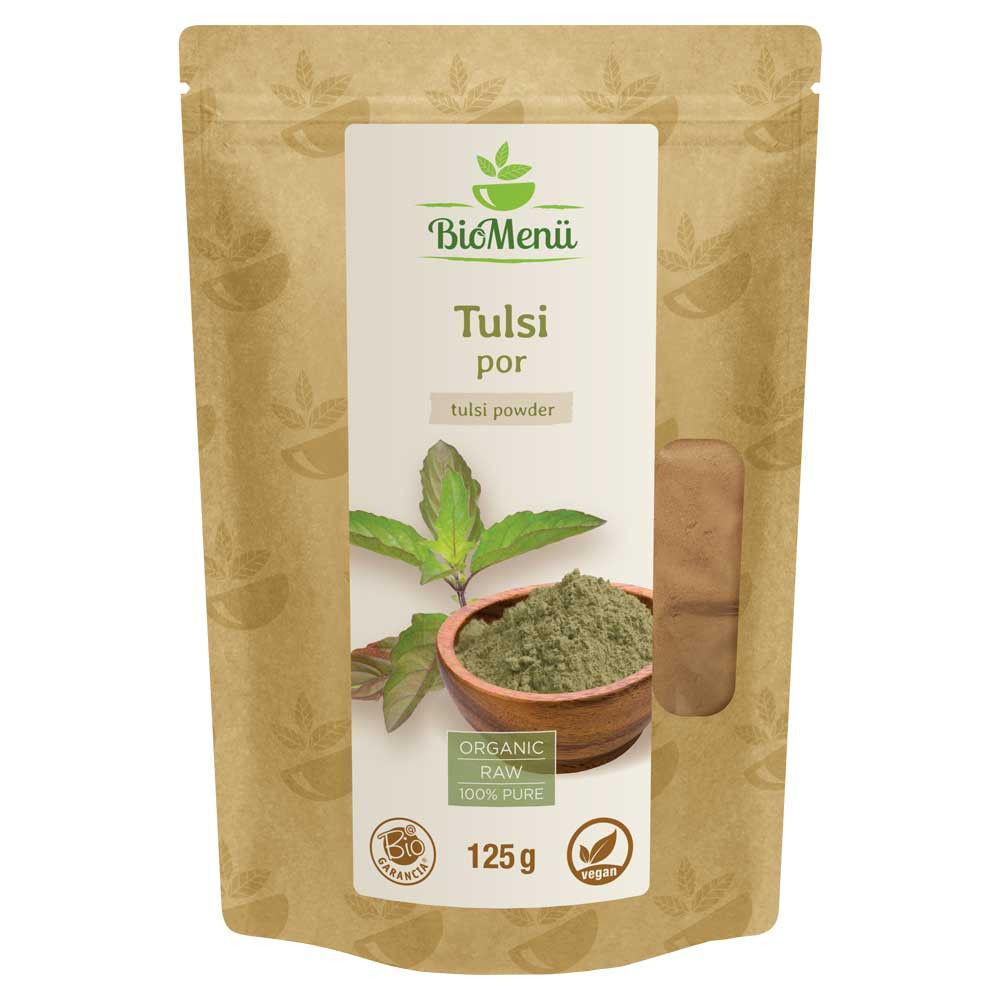
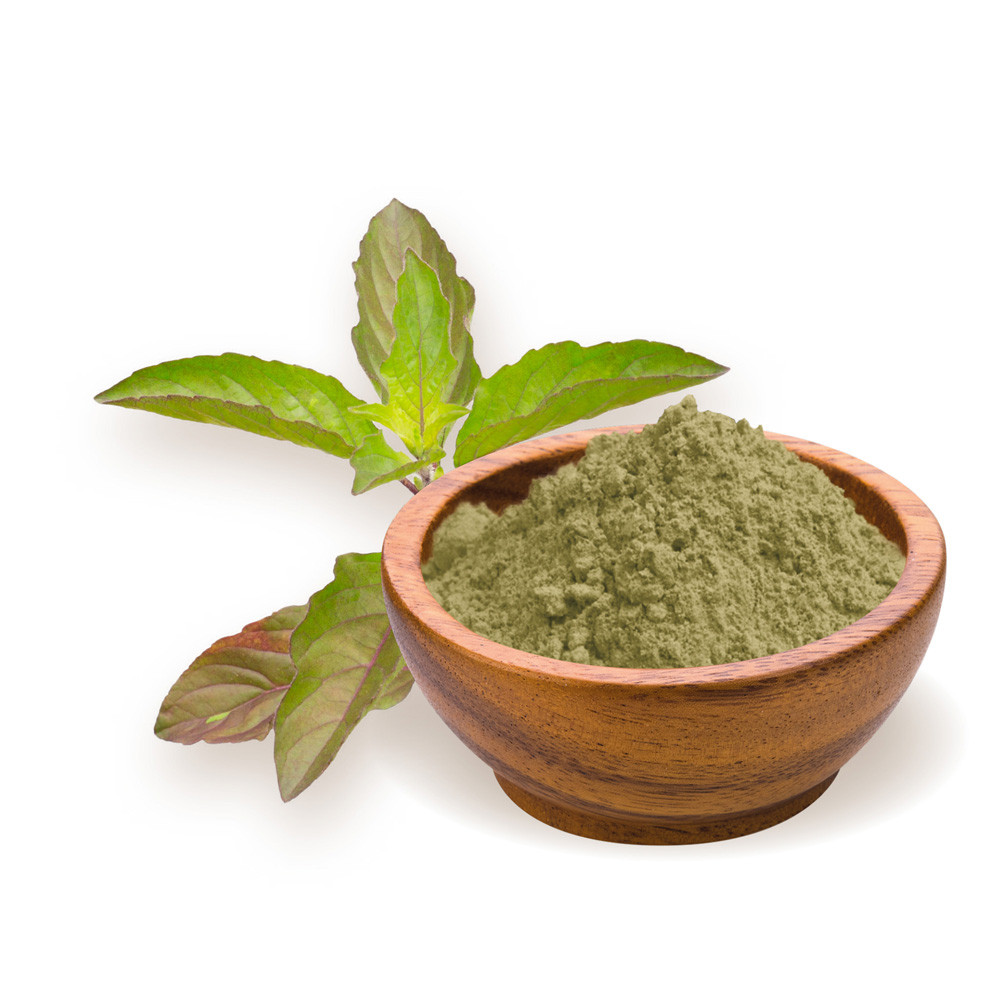
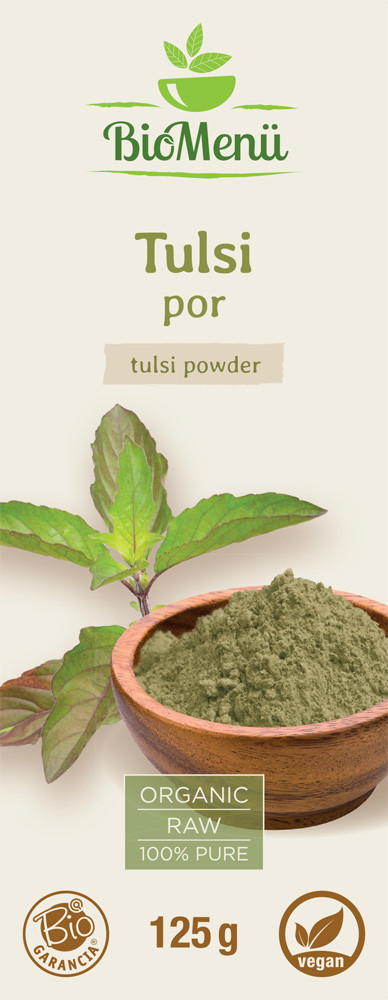
Tulsi (Holy basil, Ocimum tenuiflorum) isn’t like the sweet basil in your mom’s marinara sauce or the Thai herb you use to flavor a steaming bowl of pho. This green leafy plant, also known as Ocimum sanctum L., is native to Southeast Asia. It has a history within Indian medicine as a treatment for many conditions, from eye diseases to ringworms.
From the leaves to the seed, holy basil is considered a tonic for the body, mind, and spirit.
Many studies support the use of the entire plant of holy basil for human use and its therapeutic value. The nutritional value is also high, as it contains: vitamin A and C, calcium, zinc, iron, chlorophyll
Always talk to your doctor before taking supplements. Like many supplements, holy basil is not approved as a first-line treatment. It may also interact with medications you’re already taking.
Organic; Vegan; Natural materials; Not-irradiated; Artificial flavorless; Free-from artificial coloring; Preservative-free; BSE/TSE-free; GMO free; No added sugars; Ayurvedic; Allergen free; Low fat; Poor in saturated fat; Low in sugar; Rich in dietary fiber; Protein source
Dosage, recommended use, storage
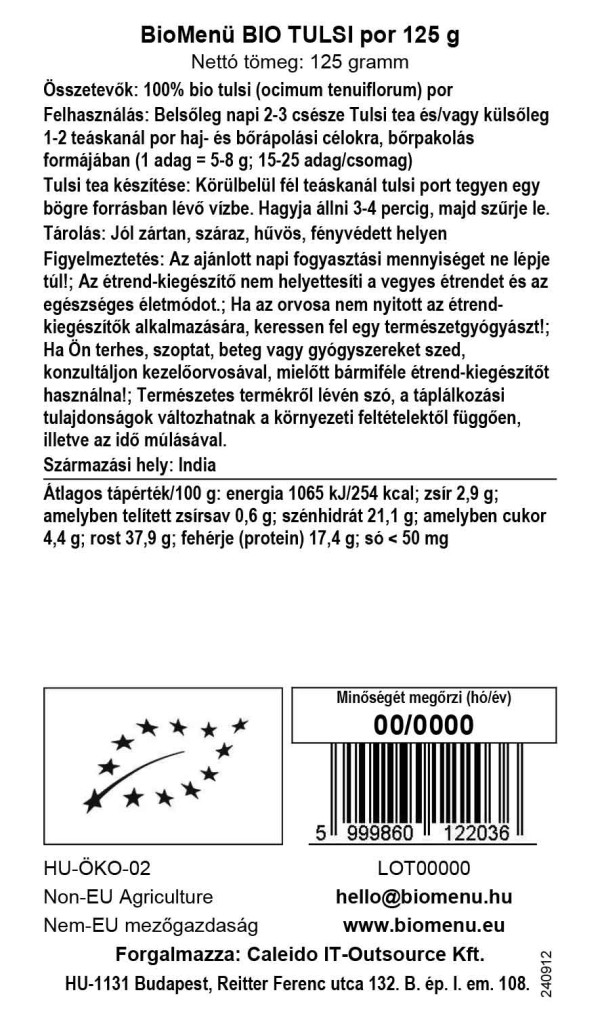
One dose = 5-8 g
2-3 cups of Tulsi tea internally and / or 1-2 teaspoons of powder for hair and skin care in the form of a skin pack
To make tulsi tea: Put about half a teaspoon of tulsi powder in a mug of boiling water. Let stand for 3-4 minutes and then strain.
Storage: In a well-closed, dry, cool, sun-protected place
Ingredients
100% Organic Tulsi Powder
Nutrition Information
| Energy | 1065 kJ/254 kcal |
| Fat | 2,9 g |
| - of which saturated fatty acids | 0,6 g |
| Carbohydrate | 21,1 g |
| - of which sugar | 4,4 g |
| Fibre | 37,9 g |
| Protein | 17,4 g |
| Salt | < 50 mg |
Average values. We regularly review our nutritional information.
Cautions
- QualityBeing a natural product, the nutritional properties may change depending on environmental conditions and over time.